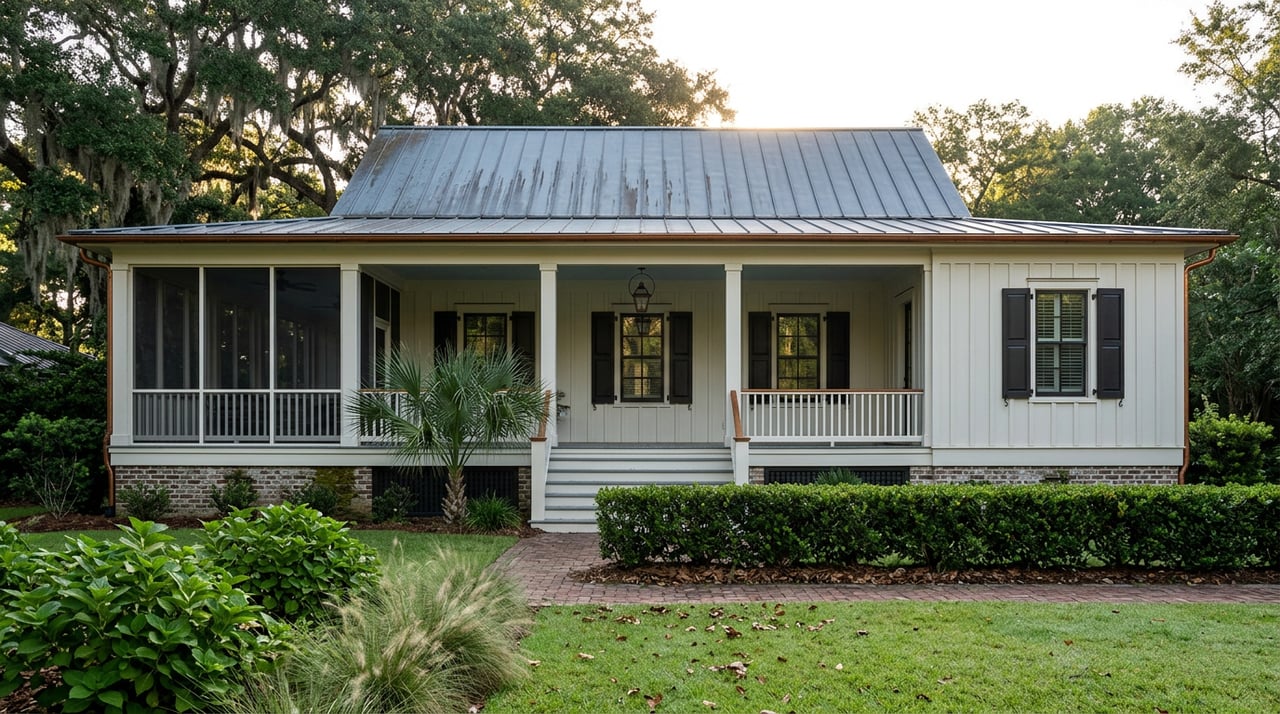
A buyer walks a listing on a quiet Old Village street, sees "waterfront" in the description, and assumes that means a boat slip is part of the deal. It isn't always. Whether that lot ever gets a dock, and how big that dock can legally be, depends on how wide the creek is at that exact point, whether a Dock Master Plan already exists for that stretch of shoreline, and whether state and federal reviewers sign off before a single piling goes in the mud. None of that shows up in the listing photos. All of it shows up in the closing timeline.
That gap between what a number implies and what it actually measures is the whole story of Old Village real estate right now, and it goes well beyond docks. If you've been comparing Old Village's median price to Carolina Park, Snee Farm, or I'On using whatever figure the first site you searched happened to show you, you've been reading a number that behaves nothing like the numbers in those other neighborhoods. It isn't lying to you. It's just measuring something much smaller than you think.
The Number on the Portal Is a Snapshot of Whoever Closed That Month
Over the three months ending May 2026, Old Village Historic District homes sold for a median price of $4.1 million, up 165.9 percent from the same period a year earlier. Read on its own, that looks like a neighborhood in the middle of an extraordinary run. Read next to the fact that only four homes sold in Old Village in May 2026, down from five the year before, it looks like something else entirely: a market so thin that a single closing can swing the whole quarter.
The same snapshot shows the median price per square foot actually falling 25.4 percent year over year, even as the headline median price more than doubled. Those two numbers moving in opposite directions in the same report is not a contradiction to untangle. It's the signature of a small sample. A $4.1 million bluff estate and a smaller cottage on an interior street can both close in the same quarter, and depending on which one happens to land in your three-month window, the "median" tells you almost nothing about what a typical buyer paid per square foot. Days on market told the same story from a different angle: homes that had been selling in 38 days a year earlier were taking 170 days by that same May 2026 snapshot, and the average house price had actually dropped 30.3 percent even as the median climbed. Three numbers, three directions, one underlying cause.
One Harbor Bluff Sale, and the Whole Quarter Moves
Old Village has produced exactly the kind of sale that explains this. A deepwater estate perched on a high bluff over Charleston Harbor sold in 2025 for $14 million, roughly $500,000 over its asking price, with a private dock and boat lift included. It's the kind of home that shows up once every few years in a neighborhood this size, not the kind of home that shows up every month. But when it does show up, it doesn't nudge the neighborhood's average. It bends it.
That's the mechanism worth sitting with before you use Old Village's price data to make any decision. In a neighborhood with hundreds of monthly closings, one $14 million outlier barely moves the average a few thousand dollars. In a neighborhood with four closings, it can move the average by hundreds of thousands. The "average price" you see on any given site this year is less a fact about Old Village and more a snapshot of whoever happened to close that month, and whether one of them owned a dock.
A market with four sales a month doesn't have a price trend. It has a sequence of individual transactions that happen to get averaged together.
Compare Old Village to the Rest of Mount Pleasant and the Problem Gets Worse
Zoom out to Mount Pleasant as a whole and the volatility mostly disappears, because the sample size gets big enough to smooth it over. Over the three months ending August 2026, Mount Pleasant sold for a median price of $915,000, up a modest 0.9 percent year over year, with 595 homes changing hands that month alone, up from 528 the year before. Typical days on market ran 64, compared to 61 a year earlier. That's a market with enough monthly transactions that no single sale, however large, can distort the picture.
| Metric (Redfin data) | Old Village (3 mo. ending May 2026) | Mount Pleasant town-wide (3 mo. ending Aug 2026) |
|---|---|---|
| Median sale price | $4.1M, up 165.9% YoY | $915K, up 0.9% YoY |
| Homes sold that month | 4, down from 5 | 595, up from 528 |
| Typical days on market | 170, up from 38 | 64, up from 61 |
Put those two rows side by side and the lesson is straightforward: the same statistical tool, a median sale price, means something completely different depending on how many transactions feed it. Mount Pleasant's 595 monthly sales produce a number that reflects a real range of buyers. Old Village's four produce a number that reflects whichever four people happened to close. If you're weighing Old Village against a bigger, more liquid neighborhood using headline prices alone, you're comparing two very different kinds of evidence, even though both numbers are labeled "median" and both came from the same data provider on the same day.
Waterfront Doesn't Always Mean What You Think It Means
Old Village's water access runs along Charleston Harbor, Shem Creek, and smaller tidal creeks like Molasses Creek, and that water access is a large part of why the neighborhood's price ceiling sits so far above the rest of Mount Pleasant. But "waterfront" on a listing sheet and "dockable" are not the same claim, and the difference is governed by rules that have nothing to do with the price you're willing to pay.
South Carolina's Bureau of Coastal Management, the state agency that reviews dock permits in the coastal critical area, limits dock size based on how wide the creek is at the proposed site, measured from marsh grass to marsh grass. Creeks narrower than 20 feet generally get no dock structure at all, unless the property carries at least 500 feet of frontage or there's no potential for a dock on the opposite bank, in which case any structure that is approved is capped at 50 square feet with no boatlifts, davits, or boat storage allowed. On wider water, the rules loosen considerably. A 12-by-12 pile spread is enough to support a 12,000-pound boatlift under current state guidance, which is why some Old Village docks come with a boat lift and others, on a narrower stretch of the same creek system, never will.
Getting from an approved plan to a standing dock also takes time. Industry estimates for a straightforward private residential dock in the Charleston area run from roughly 90 to 120 days once the application is filed, and that clock only starts after a licensed surveyor has produced a site plan and the paperwork has gone to the state. Some sites also require a joint review from the Charleston District of the U.S. Army Corps of Engineers, particularly on waterways connected to federal channels, which adds another layer and another set of deadlines to track. None of this shows up in a listing's price history. All of it shows up in the six months between an accepted offer and a boat actually tied up at the dock.
What to Actually Check Before You Compare Numbers
If you're using Old Village's price data to decide anything, whether that's what to offer on a specific house or how it stacks up against Carolina Park or Dunes West, treat the headline median and average as a starting point, not an answer. Two things are worth checking on any specific address rather than trusting the neighborhood-wide figure.
First, look at the sales history for that particular street or cluster of streets over the past year or two, not just the three-month window a site defaults to. A handful of comparable closings tells you more than one quarter's median, especially in a market where four sales is a normal month.
Second, if water access matters to you, ask directly whether the lot has an existing dock permit, whether it falls under an approved Dock Master Plan for that stretch of shoreline, and what the creek width is at the proposed dock location. A listing that already has permit paperwork on file is a different asset than one where "waterfront" is aspirational.
Common Questions
Does every waterfront listing in Old Village come with dock rights? No. Dock eligibility and maximum size depend on creek width, existing Dock Master Plan status, and sign-off from state and sometimes federal reviewers. Some marsh and harbor-facing lots qualify for a full dock with a boatlift. Others are capped at a small structure, and some creek frontage doesn't qualify for a dock at all under current rules.
Why do different sites show different average prices for Old Village? Because so few homes sell there each quarter, four in May 2026, a single high-value closing can swing the average by hundreds of thousands of dollars without reflecting what a typical buyer actually pays. Different sites pulling data over slightly different windows will land on different snapshots of the same small pool of transactions.
How long does dock permitting take in Mount Pleasant? Estimates for a straightforward private residential dock run roughly 90 to 120 days from filing to approval, longer if the creek width or the lack of an existing Dock Master Plan requires additional documentation, or if a joint Army Corps of Engineers review is required for that stretch of water.
Is it fair to compare Old Village's median price to other Mount Pleasant neighborhoods? Only with real caution. Neighborhoods with hundreds of monthly sales, like Mount Pleasant as a whole, produce medians that smooth out individual outliers. Old Village's thin volume means its median can reflect one or two transactions rather than a genuine market trend.
If you're trying to figure out what a specific Old Village address, or any waterfront property in Mount Pleasant, actually reflects once you look past the headline number, Lori Petersen can walk through the comparable sales and permit history with you directly. Get a Free Valuation to see where your property or target neighborhood actually stands, beyond whatever number the last search happened to show you.