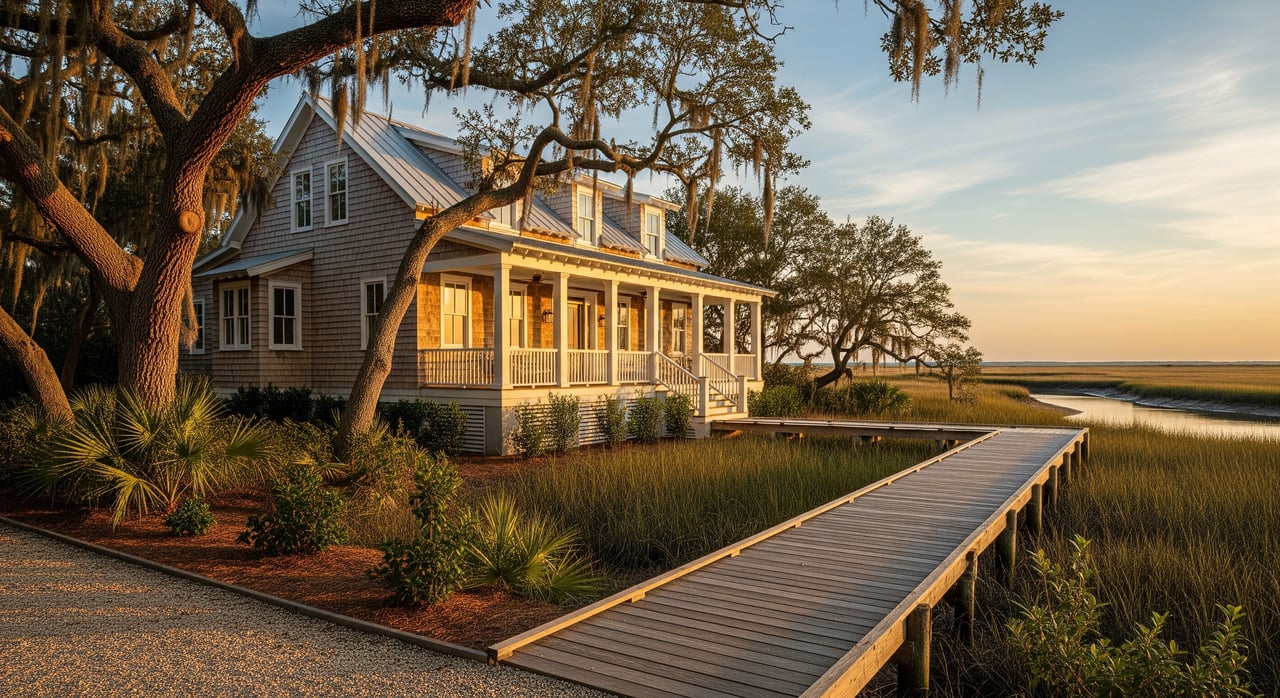
Dreaming of wide porches, breeze-filled evenings, and a home that feels made for marsh views? On Johns Island, architecture is more than a look. It is a practical response to tides, storms, and the relaxed Lowcountry lifestyle you want. In this guide, you will learn the defining styles you will see across the island, how each one holds up in coastal conditions, what affects resale, and where to find reliable local resources. Let’s dive in.
Why Lowcountry styles fit Johns Island
Johns Island sits among tidal rivers, creeks, and marshes, which means homes face humidity, salt air, wind, and periodic flooding. Architecture here adapts with elevated living levels, deep porches for shade, and materials that resist moisture. These choices reflect both regional tradition and practical resilience.
Regulations shape design too. Floodplain rules and wind codes influence how high your first floor must sit and how roofs and framing are secured. You can check property risk and elevation details using the FEMA Flood Insurance Rate Maps and the NOAA Sea Level Rise Viewer. For permitting and local standards, review the Charleston County planning and floodplain office.
Raised Lowcountry and Sea Island cottage
This is the classic coastal look you picture on a creek or marsh edge. It blends function with charm.
Defining features
- Elevated main living floor on pilings or piers, with storage or parking below.
- Full-width or wraparound porches that promote shade and ventilation.
- Metal or standing-seam roofs with a pitch designed to shed heavy rain and resist wind.
- Shutters, deep eaves, and often wood clapboard or board-and-batten siding. New builds may use fiber cement for durability.
- HVAC and mechanicals elevated above base flood elevation.
How it lives
- Cross-ventilated living spaces open to porches for indoor-outdoor flow.
- Bedrooms off central halls, with under-house space for storage or vehicles.
Why buyers like it
- Authentic Lowcountry feel, porch-forward living, and a design that fits tidal settings.
Lowcountry farmhouse
If you want a simpler silhouette and sometimes a larger lot, the farmhouse style may be a great match.
Defining features
- Clean gabled rooflines, often with metal roofing and straightforward massing.
- Board-and-batten or wide-plank-look siding with a blend of rustic and refined details.
- Open, modern interiors paired with covered porches or piazzas.
How it differs from traditional cottages
- Less emphasis on wraparound porches and ornate trim.
- Rectilinear, barn-like forms and placement that can suit acreage, paddocks, or gardens.
Coastal contemporary
Newer waterfront and subdivision homes often lean modern while staying practical for the coast.
Defining features
- Clean lines and large glass for light and views, often elevated on pilings.
- Mixed materials such as metal, stucco, fiber cement, and wood accents.
- Big indoor-outdoor transitions with folding doors, glass railings, and covered terraces.
Tradeoffs to consider
- Glass-heavy designs need impact-rated glazing or storm systems, which add cost.
- Contemporary finishes may have different maintenance needs than traditional wood.
Hybrids and Charleston influences
Many new builds blend Lowcountry massing with modern materials, creating a best-of-both-worlds feel. While the Charleston Single House is more common downtown, its porch orientation and side-yard living influence how Johns Island homes capture breezes and privacy.
Maintenance must-knows in coastal conditions
Salt, humidity, wind-driven rain, and pests affect every style. A smart maintenance plan protects comfort and value.
Foundations and crawlspaces
- Inspect pilings, connectors, and any exposed timber for corrosion or rot.
- Confirm HVAC, water heaters, and electrical panels are elevated and accessible.
- Manage moisture with proper drainage, vapor barriers, and crawlspace ventilation or dehumidification.
Roofs and gutters
- Metal roofs are durable but need periodic checks on fasteners and sealants.
- If you choose asphalt shingles, opt for high-wind-rated products and proper installation.
- Keep gutters clear and sized for intense summer storms to protect siding and foundations.
Siding, trim, and decking
- Wood siding requires regular paint or stain cycles; check porch framing and trim for rot.
- Fiber-cement and engineered products reduce maintenance while keeping a traditional look.
- Composite decking resists rot but still needs correct spacing and fastening for longevity.
Windows, doors, and storm protection
- Impact-rated windows and doors improve resilience and may reduce the need for temporary panels.
- If you use operable shutters or removable panels, maintain hardware and store panels safely.
HVAC, insulation, and moisture control
- Properly sized systems and sealed ductwork help control indoor humidity.
- Elevated homes benefit when ductwork is in conditioned space.
- Consider insulation approaches that manage moisture well in our climate.
Pest control
- Termite pressure is significant in coastal South Carolina, so regular inspections and treatment plans are common and often expected.
Landscape and site
- Salt-tolerant plantings and good grading help manage stormwater.
- Plan driveways and utilities with seasonal flooding and drainage in mind.
Resale and buyer considerations
A home’s style influences its market appeal, insurability, and upkeep. Here is how to think about value on Johns Island.
Market appeal by style
- Raised Lowcountry cottages and well-executed farmhouses often attract buyers who want authentic regional character and porch living.
- Coastal contemporary homes draw those seeking open plans and large view windows. Taste can be more specific, but water views and modern amenities may command a premium.
- Hybrids that fuse traditional forms with modern materials typically appeal to a broad audience.
Upgrades that boost value
- Elevation and documented flood mitigation, including an Elevation Certificate, reassure buyers and can help with insurance.
- Impact-rated windows and current wind-code compliance are strong selling points.
- Durable exteriors like fiber-cement siding, composite decking, and metal roofs reduce long-term maintenance.
- Highly usable outdoor spaces, such as screened porches and covered patios, are in demand.
Due diligence and inspections
- Order inspections that focus on coastal priorities: foundation, roof and flashing, drainage, and any evidence of prior water intrusion.
- Ask for the Elevation Certificate and confirm the property’s flood zone using the FEMA Flood Insurance Rate Maps.
- Review wind and flood protection features, including utility elevation and hurricane hardware.
Neighborhood fit
- Johns Island includes rural acreage, marsh-front estates, and planned communities. A home that suits its surroundings typically shows and resells better.
How to shop smart on Johns Island
Use this quick checklist to compare homes across styles.
- Verify the home’s first-floor elevation and request the Elevation Certificate.
- Confirm flood zone status and discuss flood insurance with your lender and insurer.
- Inspect under-house areas for corrosion, rot, and proper mechanical elevation.
- Evaluate roofing type, age, and wind rating.
- Check siding and trim materials and their maintenance history.
- Ask about impact-rated openings or storm protection systems.
- Review HVAC sizing, ductwork location, and humidity control.
- Consider how porches, screened rooms, and terraces extend year-round living.
Local resources
- Explore flood maps and elevation data in the FEMA Map Service Center.
- Review long-term coastal context with the NOAA Sea Level Rise Viewer.
- Find local permitting and code guidance at the Charleston County planning and floodplain office.
- Learn about regional architectural traditions through the Historic Charleston Foundation.
- For market context, consult the Charleston Trident Association of Realtors.
- For coastal construction and maintenance guidance, see South Carolina Sea Grant and Clemson Extension.
Ready to compare homes and neighborhoods that fit your style and lifestyle? Reach out to Lori Petersen for a tailored plan to buy or sell on Johns Island.
FAQs
What makes Johns Island homes different from inland homes?
- Proximity to tidal waters, higher humidity, and wind exposure favor elevated designs, deep porches, and durable materials that manage moisture and storm risk.
How do elevated foundations affect ownership costs on Johns Island?
- Elevated living levels can reduce potential flood damage and improve insurability, but they add maintenance needs for under-house hardware, ventilation, and access.
What should I check before buying a waterfront or marsh-front home?
- Request the Elevation Certificate, confirm the flood zone with FEMA maps, inspect foundations and mechanical elevation, and review storm protection for windows and doors.
Which exterior materials are best for Lowcountry conditions?
- Fiber-cement siding, composite decking, and metal roofing are popular for durability, while wood elements require regular paint or stain cycles to stay protected.
How do contemporary homes handle hurricanes and large windows?
- Look for impact-rated glazing or engineered storm systems, reinforced roof connections, and code-compliant details that address wind and water intrusion.
Do water views always increase resale value on Johns Island?
- Views are attractive, but overall value depends on elevation, flood risk, maintenance profile, and how well the home fits neighborhood context.