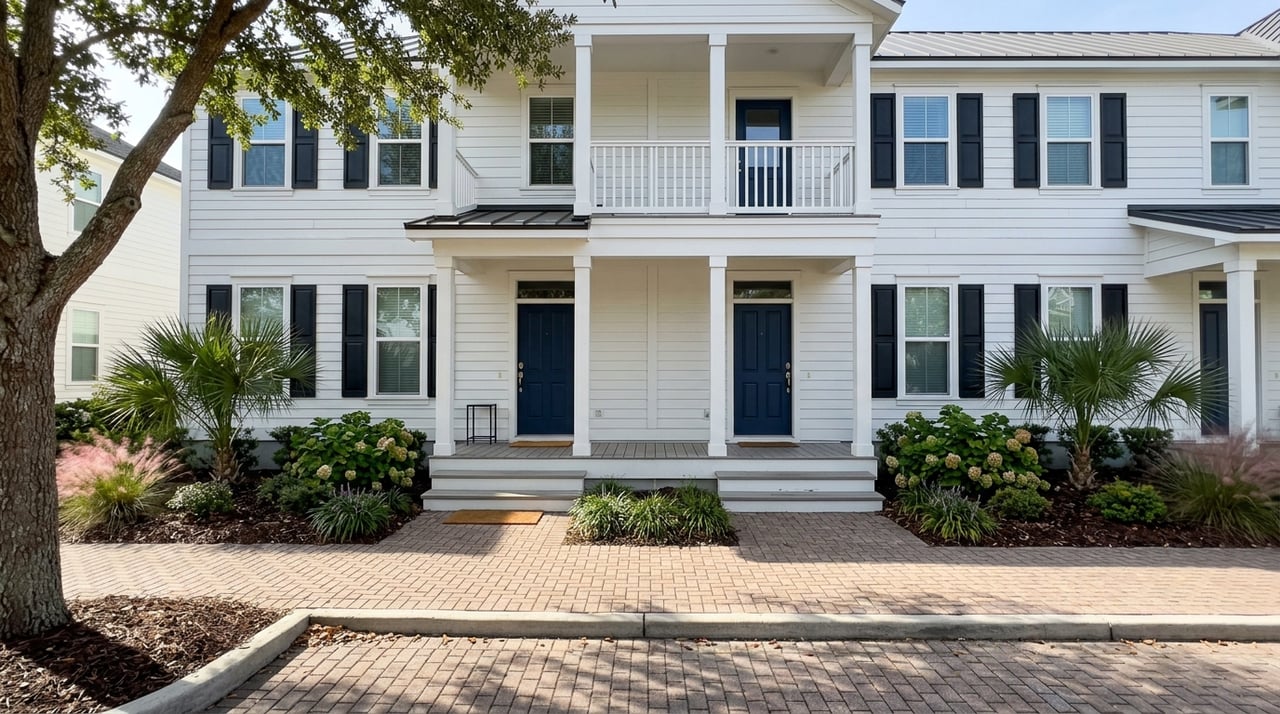
Looking for a home that gives you more time to enjoy Daniel Island and less time worrying about upkeep? For many buyers, that is exactly what a condo or townhome can offer here. If you want walkability, amenities, and a more streamlined day-to-day routine, Daniel Island’s attached-home options deserve a close look. Let’s dive in.
Why attached homes work on Daniel Island
Daniel Island was planned with walkability in mind. Official town-center design guidelines call for a mix of uses and a layout that helps residents reach destinations on foot. That matters if you want a home base that supports an easier lifestyle, whether you live here full time or use the property as a second home.
The island’s community overview adds to that appeal. You have downtown shops, restaurants, offices, schools, and resort-style amenities within the broader community, along with hundreds of acres of parks and a trail system of more than 25 miles. Historic Charleston is also about 15 minutes away, which makes Daniel Island feel connected without losing its own sense of place.
For many buyers, that combination is the real draw. A condo or townhome can make it easier to lock and leave, cut down on exterior maintenance, and stay close to the parts of island life you actually want to use.
What condo and townhome inventory looks like
Daniel Island’s attached-home market is not one-size-fits-all. The island is governed by multiple associations, and that can affect fees, rules, and amenity access depending on where you buy. DICA includes single-family and townhome properties south of I-526 plus Parkside Condominiums, while DITA covers the business district and most multi-family residential developments.
That means your search should go beyond bedrooms and price. You also want to know which association governs the property, what is included, and how that fits your lifestyle. Two homes with similar square footage can come with very different ownership details.
Pricing also covers a broad range. Recent local MLS examples include a 2-bedroom, 2.5-bath, 1,680-square-foot townhome at 200 River Landing that sold for $730,000. Other attached-home closings at 145 Pier View Street, 2267 Daniel Island Drive, and 2233 Daniel Island Drive closed at $1.1 million, $940,000, and $889,000 respectively.
Current listings show the upper end can move much higher. A 3-bedroom, 4-bath, 1,964-square-foot attached home is listed at $984,900, while a larger 3-bedroom, 4-bath, 2,890-square-foot attached home is listed at $2.85 million. In short, Daniel Island offers attached homes at several price points, with newer and more premium pockets pushing values upward.
Newer pockets to watch
One of the biggest areas to watch is The Waterfront. This 22-acre village community includes model residences and townhomes that are now open, with promised access to a gourmet market, restaurant, rooftop bar, green spaces, parks, and water activities. For buyers who want newer product and a lifestyle-centered setting, it stands out.
The Architectural Review Board also lists more low-maintenance projects in motion. These include The Waterfront Phase 4 apartment and condo buildings, The Marshes townhomes, Davis Development apartments, and the Nowell Creek Village townhome apartments. That ongoing development helps explain why attached homes remain an important part of Daniel Island’s housing mix.
Walkability and amenities that support easy living
Low-maintenance living is not just about the home itself. It is also about what you can do nearby without getting in the car for every errand or outing. On Daniel Island, that is a big part of the appeal.
The community includes hundreds of acres of parks, a trail system of more than 25 miles, and three saltwater pools through the POA. These amenities are supported by assessments that help maintain trails, pools, boat launch ramps, parks, and other shared spaces. If easy living means having built-in recreation close to home, Daniel Island checks that box.
City-owned amenities add even more convenience. Daniel Island Waterfront Park sits on the Wando River and includes benches, fishing, a playground, trails, and a fishing pier. The Daniel Island Recreation Center offers a multi-purpose indoor space that hosts youth sports, fitness classes, and community programs.
The town-center design also supports a pedestrian-oriented feel. Guidelines describe tree-lined sidewalks, storefronts, and a connection between the downtown commercial district and the waterfront district. For buyers who value routine and convenience, that layout can make daily life feel simpler.
There is also another transportation option many buyers appreciate. The POA says residents can use the Daniel Island Ferry for round-trip service to historic downtown Charleston. That can be a nice bonus if you want another low-car option for outings or part of your regular routine.
What to know about fees and governance
If you are considering a condo or townhome on Daniel Island, due diligence matters. Because the island has different associations, you should confirm early which one governs the property and what that means for annual costs, rules, and amenities.
The POA says each association approves budgets each fall and updates reserve studies every year. These reserve studies evaluate common-area components and projected funding needs over a 30-year period. That long-range planning is important, but it also means buyers should understand how shared expenses are managed.
For 2026, DICA annual assessments are $1,029 and DIPA assessments are $1,074, both due January 1. That works out to about $86 per month for DICA and about $90 per month for DIPA before any other property-specific charges. Depending on the home, there may be additional fees beyond those base amounts, so it is smart to review the full ownership picture before you make an offer.
Amenity access is worth confirming
Amenity access should never be assumed. The POA notes that timely assessments help maintain island amenities, and access can be suspended if an account is delinquent. DICA residents currently receive two amenity fobs tied to the property, which is another reminder that the details matter.
For buyers, this is less about complication and more about clarity. When you understand what is included, how access works, and what the ongoing costs are, you can compare homes more confidently.
ARB rules and the lock-and-leave tradeoff
Daniel Island’s Architectural Review Board is another part of the ownership experience. The ARB reviews exterior modifications to help keep the community visually cohesive. If you are thinking about paint changes, patio work, landscaping changes, or facade updates, you should expect an approval process.
For some buyers, that is a positive because it helps preserve the island’s Lowcountry character. For others, it is simply something to factor into the decision, especially if you want to personalize exterior spaces. Either way, it is part of the tradeoff that often comes with a polished, low-maintenance community environment.
Flood diligence matters on Daniel Island
On any coastal purchase, insurance and flood review should be part of your plan from the start. The City of Charleston says all properties in the city are in a flood zone, though not all are in the FEMA Special Flood Hazard Area. That is an important distinction, but it does not remove the need for careful review.
The city advises buyers to request a flood hazard information letter and use FEMA’s Map Service Center. It also notes that standard homeowners insurance does not cover flood damage and that NFIP policies typically have a 30-day waiting period. For condo and townhome buyers, this is one of the key practical steps in understanding the full cost of ownership.
Is a Daniel Island condo or townhome right for you?
If your goal is easier living in a well-planned Charleston-area community, Daniel Island attached homes offer a lot to like. You may find the right fit if you value walkability, nearby amenities, and a home that supports a simpler routine. Newer options and established pockets also give buyers several ways to enter the market, depending on price point and lifestyle goals.
At the same time, easy living does not mean skipping the details. Association structure, assessments, amenity access, architectural rules, and flood diligence all deserve close attention. When you look at the full picture, you can choose a property that feels easy not just on move-in day, but for years to come.
If you want help comparing Daniel Island condos and townhomes, understanding the fine print, or narrowing your options by lifestyle and budget, Lori Petersen can guide you through the process with local insight and a high-touch approach.
FAQs
What makes Daniel Island condos and townhomes appealing for easy living?
- Daniel Island attached homes can appeal to buyers who want a lower-maintenance property close to parks, trails, shops, restaurants, and other everyday amenities in a walkable setting.
What should buyers know about Daniel Island HOA and POA fees?
- Buyers should confirm which association governs the property, review annual and property-specific fees, and understand what those fees support, including amenities, reserves, and common-area maintenance.
What are Daniel Island attached-home prices like?
- Recent examples in the local market range from $730,000 for a townhome sale to current attached-home listings near $984,900 and up to $2.85 million in more premium segments.
What amenities come with Daniel Island condo and townhome living?
- Depending on the property and association, buyers may have access to island amenities such as parks, trails, saltwater pools, boat launch ramps, and other shared community features.
What should buyers check before purchasing a Daniel Island condo or townhome?
- Buyers should review the governing association, assessments, reserve planning, amenity access rules, ARB requirements, and flood-related insurance considerations before moving forward.
Are newer Daniel Island townhome and condo options still being built?
- Yes. The Waterfront is a newer attached-home area to watch, and additional low-maintenance residential projects are also listed by the Architectural Review Board.